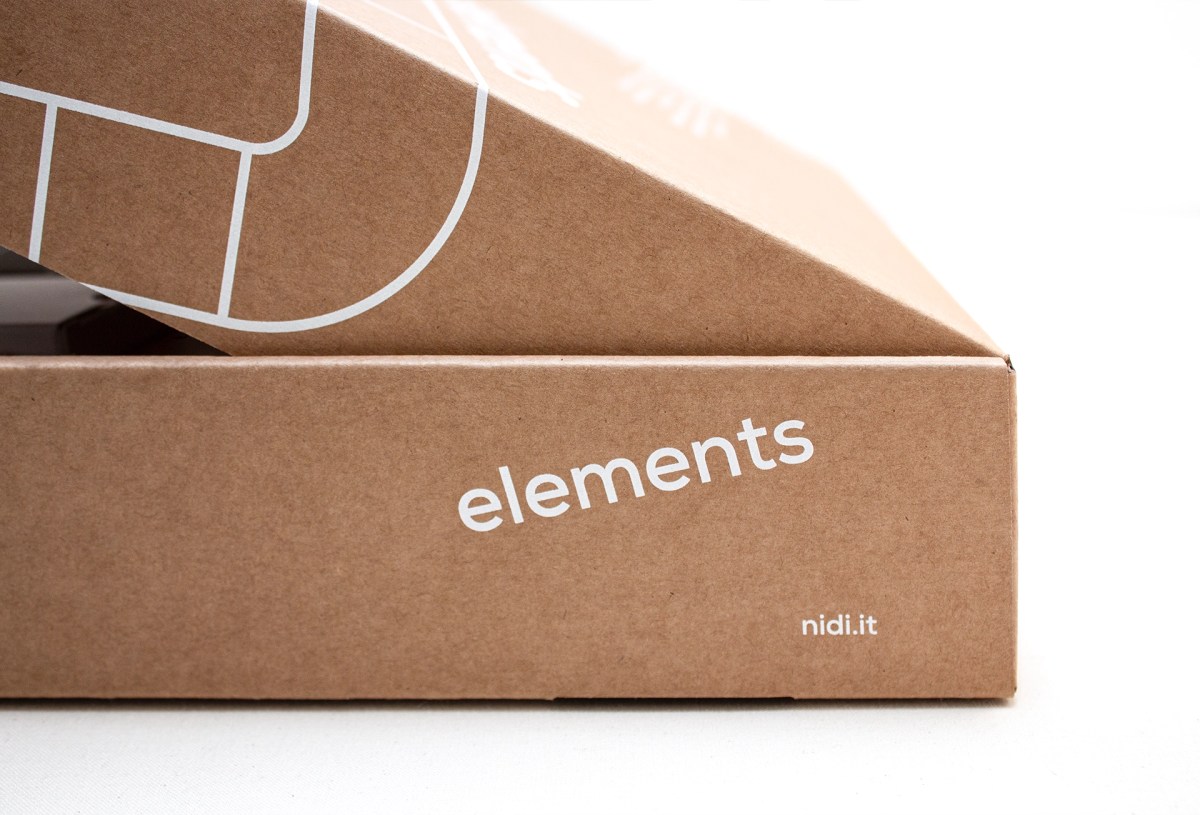
Cinquanta3 – Building an integrated communication system
When the product becomes a system
In 2020, Cinquanta3 faced a decisive transition: moving beyond the traditional division by collections and presenting the product as a cross-functional system, capable of furnishing the entire home as well as public spaces.
No longer living, sleeping, or service areas, but a single modular system with maximum compositional freedom. The change was not only productive, but narrative and commercial.
How do you make a potentially infinite system readable?
How do you prevent freedom from generating confusion?
Building a new logic
The work did not start from the catalog, but from the structure.
We defined a concept capable of expressing compositional freedom as the central value, creating a clear hierarchy between “Home” and “Public” and transforming the product into a recognizable system.
The color differentiation — yellow for home, green for public spaces — became a stable code across all tools: not a graphic element, but an organizational principle.
The catalog thus became a tool for consultation and configuration: not only finished environments, but spaces reconsidered multiple times to reveal alternatives and the system’s potential.
Each composition is explained, measured, and made understandable; complexity is made usable.
A system across all tools
The logic developed for the catalogs became the foundation for everything else.
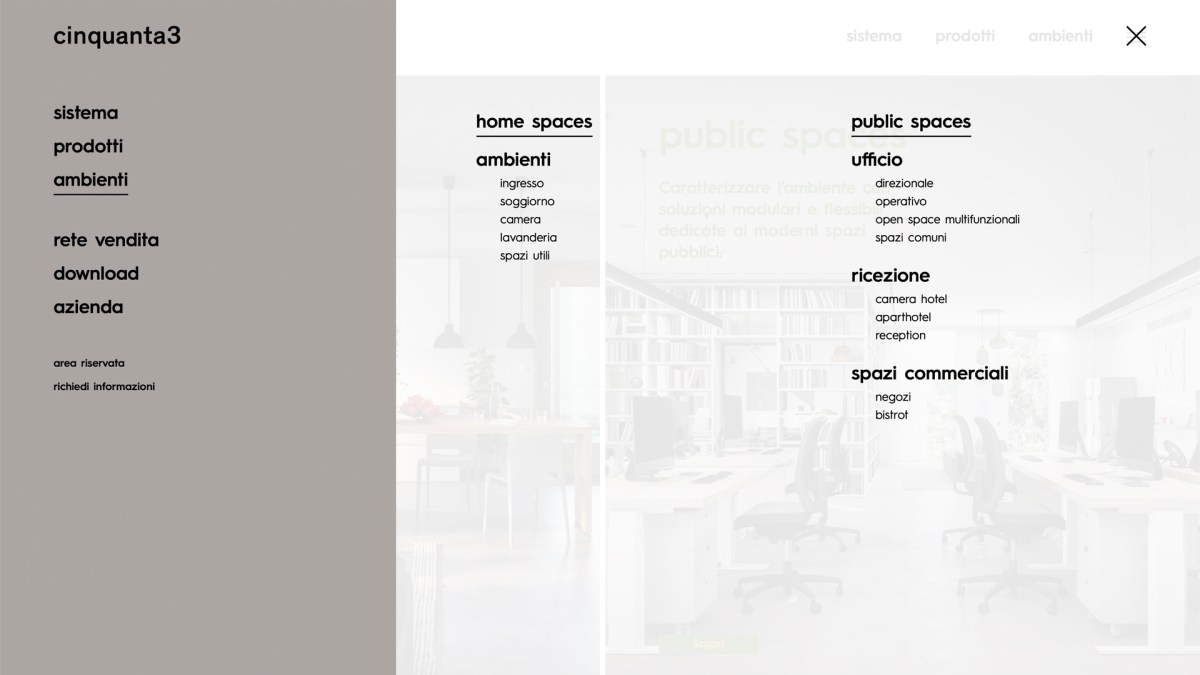
The website adopted the same structure, giving equal importance to “Home” and “Public,” simplifying the architecture to support the sales process.
The sales app translated the system into an operational tool for the sales network: clear navigation, coherent structure, and immediately accessible technical content.
The showroom was also designed according to the same principle, transforming the space into a readable path aligned with the defined identity.
Not separate tools, but a single direction.
Evolving without losing coherence
The project did not end with the first catalog cycle.
In 2026, the system evolved further: no longer organized by environments, but by functions. Five distinct tools — Life Spaces, Service Spaces, Work Spaces, Hospitality Spaces, and The System — redefined the content structure.
The original framework proved scalable: the system expanded without losing clarity.
Effects on the commercial system
The new logic made the product range clearer. The sales network more autonomous. The presentation more coherent. The brand more recognizable.
Compositional freedom is no longer an abstract concept: it has become a usable structure.
A matter of architecture
When a brand shifts from collections to system thinking, not only the offer changes.
The way communication is conceived changes as well.
For us at Grucciadesign, building a logic means designing an architecture capable of supporting tools, space, and digital environments over time.

“The work did not start from the catalog, but from the structure.”
“The work did not start from the catalog, but from the structure.”


“The color differentiation — yellow for home, green for public spaces — became a stable code across all tools: not a graphic element, but an organizational principle.”
“The color differentiation — yellow for home, green for public spaces — became a stable code across all tools: not a graphic element, but an organizational principle.”


“The website adopted the same structure, giving equal importance to “Home” and “Public,” simplifying the architecture to support the sales process.”
“The website adopted the same structure, giving equal importance to “Home” and “Public,” simplifying the architecture to support the sales process.”



“The new logic made the product range clearer. The sales network more autonomous. The presentation more coherent. The brand more recognizable.”
“The new logic made the product range clearer. The sales network more autonomous. The presentation more coherent. The brand more recognizable.”